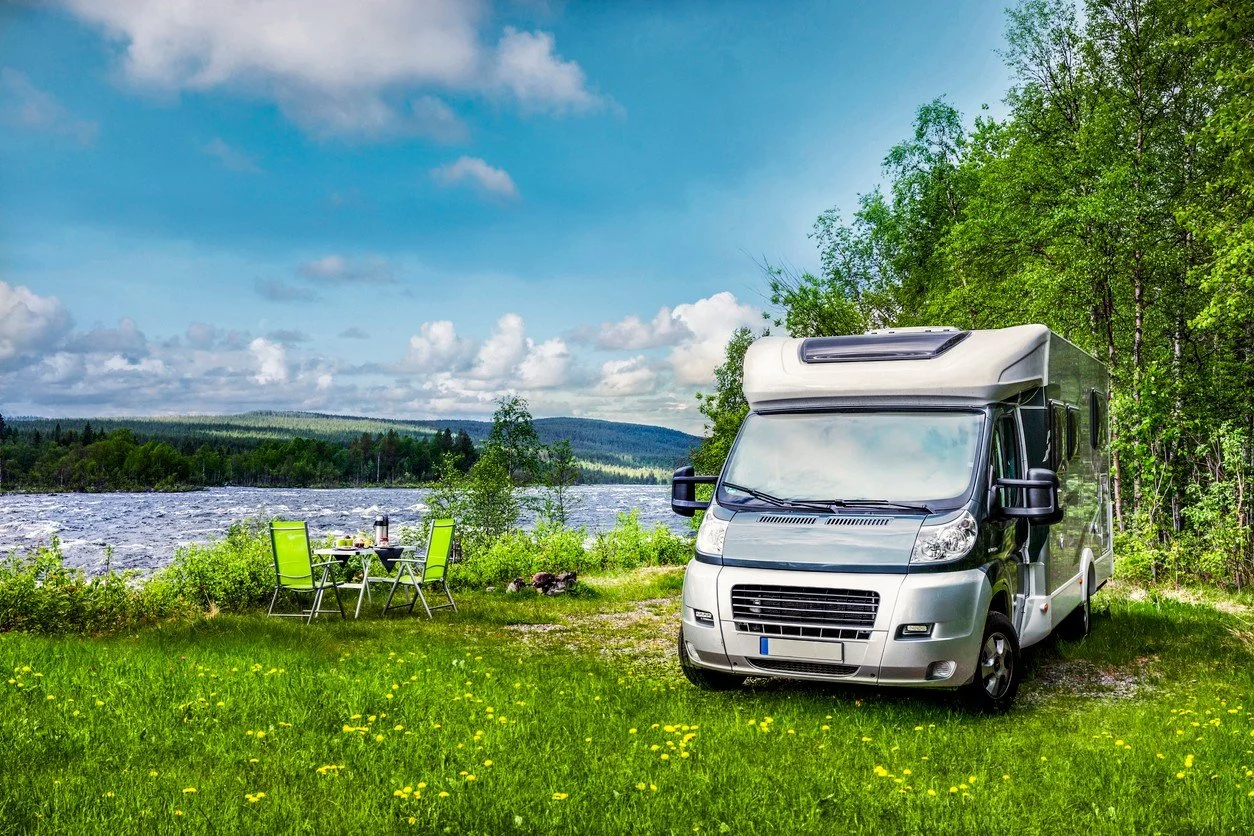
Sometimes, nothing sounds better than leaving it all behind and hitting the road, exploring the country, and living life in a converted van. For an increasing number of people, it's no dream– it's their reality. But before you begin your van life journey, you'll need to assemble some must-have items that will soon become your new favorite things. We've broken them down into a few categories for you.

Pros and Cons of RV Living
The allure of the open road has always been a strong one for many people. But in the last few decades, it's become more possible than ever thanks to the advent of RVs and other ways to live on the go. This is especially true over the past few years, as the COVID-19 pandemic created millions of new remote workers with the desire to get out and explore. But not everyone understands RV living - with all its advantages and drawbacks - before taking the plunge. Read on as we break down everything new potential RVers need to know about the exciting but sometimes complicated RV lifestyle.
Tips for Cleaning Solar Panels
1. The first thing to remember is that you don’t generally need to clean your panels unless there is an obvious obstruction preventing sunlight from reaching the cells. In our experience, even dirty/dusty panels only lose around 10% production on average. If it rains more than a few times a year where you are (or where you travel), you don’t have to worry about regular cleaning in most cases. This is especially true for vehicles, where the panels can be difficult to access from the ground or where the vehicle roof may not be walkable (Airstreams etc.).
Solar Panels vs Generator for RV
One of the biggest benefits of RV travel is the ability to camp just about anywhere your wheels can take you. But most RVers will agree that camping without the benefit of your full electrical system leaves something to be desired. When it comes to keeping the lights on and the juice flowing while on the go, the choice often comes down to two methods - solar panels vs. a generator for your RV. Each has its own unique pros and cons that may make it more suitable for one type of RVer or another. We're taking a deep dive into these two options to figure out which one's best for you.
How to Jump Your Class A with a Lithium Battery Bank
How Do Orion's & Cyrix's Interface w/ a 7 Pin Connector?
The 12V (#4) lead in the 7-pin harness is the 12V power source from the chassis, and when the tow-vehicle engine is idling the alternator drives the voltage higher thus activating the Orion to charge (permitting programming is correct). However, depending on the chassis manufacturer's setup this source comes in one of three common forms...
Best RV Boondocking Tips and Tricks
If you think your RV camping options are limited to expensive, crowded resorts or dingy, out-the-way RV parks, think again. There's a whole world of wonderful RV boondocking out there, just waiting for you and your fellow campers to discover. But there are some vital things to know before you head off into the wilderness in order to make the most of your boondocking adventure. Let's take a closer look at some top RV boondocking tips!
10 Best RV Camping Spots on the Oregon Coast
RV camping is one of the best ways to immerse yourself in the natural environment. And there are few parts of the country more breathtakingly beautiful than the Oregon Coast. RV camping on the Oregon coast offers spectacular ocean views, peaceful forest hideaways, and so much more waiting to be explored along more than 350 miles of coastline.
Must-Have RV Kitchen Accessories
One of the biggest adjustments for many new or casual RVers is downsizing from their relatively spacious home kitchen with normal appliances to a tight RV kitchen with limited storage and sometimes underpowered appliances. It can force you to reevaluate how you cook and just how much equipment you really need. But it can be a bit confusing figuring it all out, and no one likes being caught without a crucial piece of equipment on a family camping trip. That's why we've put together this list of your must-have RV kitchen items to ensure you're able to cook delicious, healthy meals no matter where solar-powered RV life takes you.
Special Delivery of an Empty Shell Van Kit
AM Solar recently had the opportunity to build up a dream rig for a client. This 2021 Mercedes Sprinter Freightliner 2500 is the long and tall version with no windows. The client wanted solar charging, inverter/charging, alternator charging, and a small DC distribution kit. AM Solar’s experience with empty van installations led them to installing the batteries and inverter system over the wheel well, which can be built around nicely once you are ready to install cabinets, a bed, and other furniture.
10 Tips for RV Living with Kids
It's a dream for many - buying an RV for an extended road trip, exploring new destinations and seeing the sights. It may seem like something exclusively for single people or couples. Still, full-time RV life with kids is more than possible - it can be one of the most rewarding, enriching experiences a family can have together. But life on the road with kids does come with some potential pitfalls as well. So how do you make the most of RV living as a family? Here are some of our top tips.
It All Started With Jelly Bean: A VanLife Story
Intro to the Family with Camping in its DNA
Recently, AM Solar had the pleasure of meeting up with Beth Mowll and her husband for their 4th van build. The Mowlls recently purchased another Sprinter to convert to a camper. Besides the one the Mowlls use themselves, they wanted to gift these other three converted vans to their children. This way, the Mowlls and their adult children can adventure to the same places they’ve always enjoyed as a family. Getting off-grid to the middle of nowhere is in their nature.
Bus Life Adventure - Skoolie Interview
We recently caught up with our friend Brock Butterfield, owner of BusLifeAdventure.com. He’s our remote tech guru from Houndstooth Tech and one of our favorite members in the skoolie community. Brock’s near death experience drove him to ultimately quit his 9-5 corporate job, buy a school bus and convert it into a tiny home for traveling and an alternative lifestyle. Although he no longer lives in his skoolie full-time, we still wanted to hear about his tricks, tips, and skoolie stories.
240 Volt AC items in an RV setting - don’t try to run them off grid!
240V loads are oversized for inverters. Even if you could operate them it wouldn't be recommended. You can only use 240VAC loads when on 50 amp service. We simply don't support off-grid 240VAC at this time.
We do not recommend Autotransformers, and can't support them at all. You would honestly be better off with a dual inverter system in many cases!
Fortunately, these are all the 240VAC items that we are aware of for RVs.
DC/DC Charger (Orion) vs. Battery Combiner (Cyrix)
DC/DC Charger
This device draws current from the starter battery/alternator and transforms it into three-stage charging for a house battery. The charger can step-up or step-down the input voltage to supply the house battery bank with whatever it needs depending on the battery chemistry. The charging profile can be programmed via Bluetooth. Because of the ability to regulate voltage, a DC/DC charger can charge a house battery bank up to 100% state of charge. A Victron Orion is rated for 30A of charging current. Multiple Orions can be paralleled for more current. The Orion comes in non-isolated and isolated models. Isolated models will work in all applications. Non-isolated models are not recommended for trailers.
Coffee Makers and AC voltage
Routing Solar Cables Down A Vent
Properly Storing Your RV
RV owners often overlook proper off-season storage of batteries. When your vehicle is left in storage, it is important that the batteries aren’t drained past a certain point. If they are lead-acid batteries (including AGM), it is also important to give them a frequent full charge at certain intervals. Lead-acid batteries will discharge over time and must be maintained, even if they are not being used. The rate of self-discharge depends on the batteries’ design and the temperature. Flooded batteries have higher self-discharge rates than AGM batteries. Higher temperatures increase self-discharge, which is why batteries should be stored in a cool place. Lithium batteries have virtually no self-discharge.
Shunt wiring shouldn’t be difficult
Here’s an analogy that may help you understand battery monitor shunt wiring.
You have a train station. / You have a battery bank.
You have a train counter that can only count trains going on one track. / You have a shunt.
You want to count all the trains that come into the station. / You want to measure net current on the battery bank.